Common Types of Ringworm Infections
Tinea Pedis or Athlete’s Foot
This type of ringworm commonly affects pubertal and adult males. It is a fungal infection that develops on the feet and the skin between the toes. It happens when your feet remain in shoes and socks all day, promoting a warm and moist environment where fungi can grow. The common symptoms of tinea pedis are itchiness, scaly or cracked skin between toes, redness, and blisters on the foot.
Tinea Cruris or Jock Itch
This fungal infection occurs on the groin area, rectum, or folds on the inner thighs. It commonly forms itchy red spots which can grow and spread to other areas in a half-moon shape. The rash may have blisters on the edges and the surrounding skin can feel flaky or dry.
Tinea Capitis or Scalp Ringworm
This is a fungal scalp infection that causes scaly and itchy bald spots or patches to appear on the head. In some cases, scalp ringworm can also cause painful areas on the scalp and affect the quality of hair strands which can lead to hair loss.
Tinea Unguium or Nail Ringworm
This condition refers to the fungal infection of the nails and can sometimes be called onychomycosis. This happens when you frequently walk barefoot in damp areas, have sweaty feet, or have another skin infection like Athlete’s foot.
A fungal nail infection can start from one toenail or fingernail and spread to other nails. If you have nail ringworm, you’ll notice discoloration, shape distortion, or thickening of one or more of the nails.
Tinea Corporis or Body Ringworm
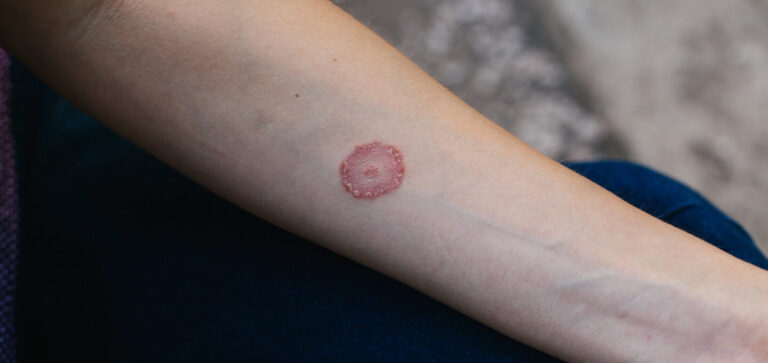
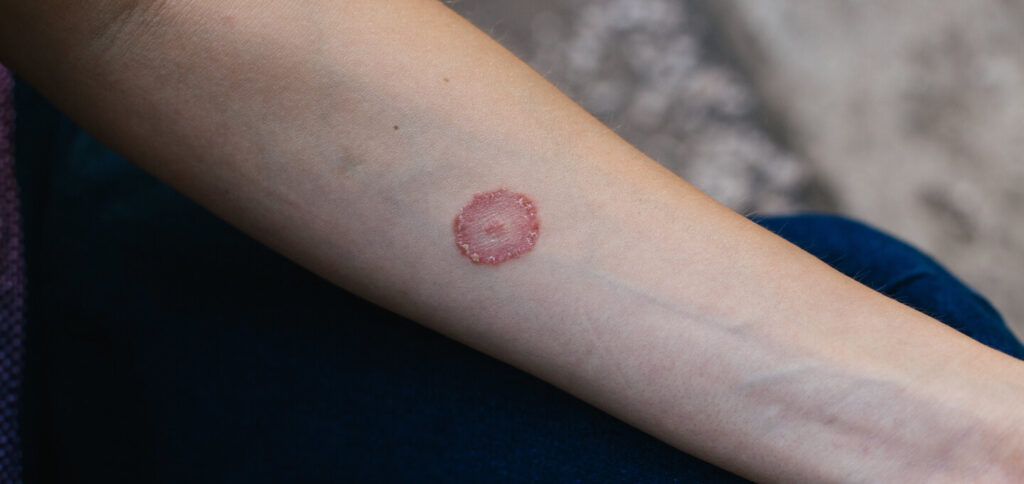
This fungal infection can affect any part of the body such as the shoulders, arms, neck, trunk, and buttocks. It can form round-shaped skin lesions that often feel itchy and have raised borders.
Tinea Barbae or Fungal Hair Infection
This refers to the infection that happens on the beard and mustache. It is less common than scalp infection but it can still be seen among adult men who grow facial hair. It can cause red rashes and swollen spots around the mouth.
Treatment Options for Fungal Infections
Ringworm treatment will depend on the type of infection and the location where its symptoms have formed. Here are some of the recommended treatment options for fungal skin infections:
- Topical antifungal cream: Most cases of Athlete’s foot, Jock Itch, and nail ringworm can be remedied with over-the-counter ointments or prescription topical treatment.
- Oral antifungal medicine: Scalp ringworm often requires taking an oral antifungal tablet to treat the fungi that live deep in the hair follicles and cannot be removed by topical medications.
- Antifungal shampoo: Tinea capitis can also be treated with specially formulated antifungal shampoos.