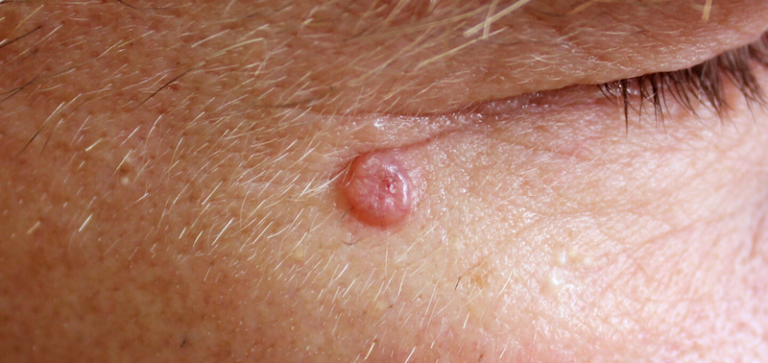
Basal cell carcinoma (BCC) is the most common type of skin cancer and the most frequently diagnosed cancer in the United States. It develops in the basal cells, which are located in the deepest layer of the epidermis (the outer layer of the skin). These cells normally produce new skin cells to replace those that are naturally shed over time.
Most basal cell carcinomas develop as a result of cumulative ultraviolet (UV) exposure from the sun or tanning beds. Over time, UV radiation damages the DNA within basal cells. When that damage is no longer repaired correctly, the cells can begin to grow uncontrollably, forming a basal cell carcinoma.
Basal cell carcinoma typically grows slowly and rarely spreads to other parts of the body. However, if left untreated, it can continue to enlarge and invade nearby skin, cartilage, muscle, or even bone, making treatment more complex.
Although BCC is most common in older adults with a history of significant sun exposure, it is increasingly diagnosed in younger individuals as well. People with fair skin, light-colored eyes, a history of frequent sunburns, or indoor tanning are at the highest risk, but basal cell carcinoma can occur in anyone.
The good news is that when detected early, basal cell carcinoma is highly treatable, and most patients are cured with a single procedure.