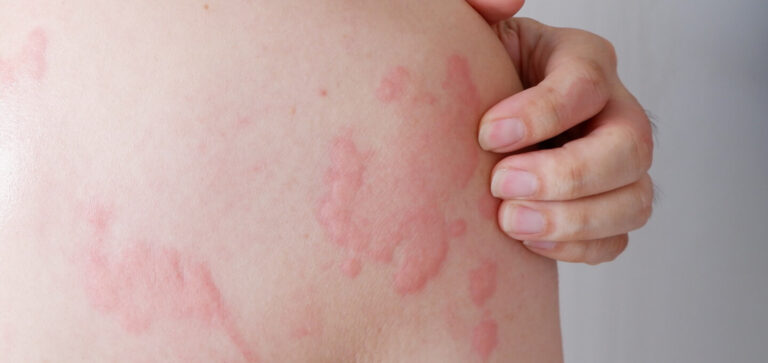
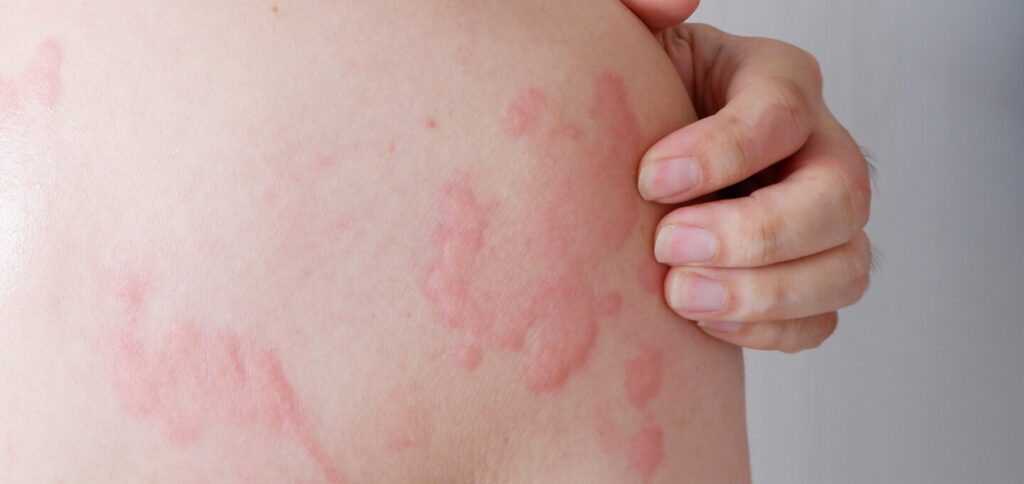
Hives can be categorized into 2 main types: acute urticaria and chronic urticaria. As with any medical condition, acute hives are short-term skin reactions that can appear suddenly and last no more than 6 weeks. They’re usually caused by an allergic reaction or a viral infection.
Most acute hives can clear away after a few days or weeks, but they may recur when you are exposed again to a particular allergen. Some of the most common triggers of acute urticaria are an insect sting, medications, and certain foods.
On the other hand, chronic hives are itchy welts that can last for more than 6 weeks. This type of urticaria can come and go suddenly, and they are less likely to be caused by an allergy. Chronic urticaria may develop due to stress, autoimmune disorders, hormonal changes, or other systemic problems.
Some people can never identify the cause of their skin hives. In these cases, their condition is known as chronic idiopathic urticaria.
Physical Urticaria: Another Form of Skin Hives
There are also other sub-forms of hives depending on the cause and trigger of the skin reaction. The most common subtype is physical urticaria which are hives caused by direct stimulation of the skin. Any excessive rubbing or scratching can cause irritation and lead to a skin reaction.
Physical urticaria can have other forms such as:
Cholinergic urticaria: a type of hives that develops from an increase in body temperature. They can break out after a particularly intense workout when you’re feeling hot and sweaty.
Pressure urticaria: this type of urticaria happens as a response to constant pressure on the skin. This usually occurs along with fatigue, body aches, and body temperature increase. It can also be a result of an autoimmune disease.
Solar urticaria: this skin reaction happens when you have sensitivity to sunlight exposure and UV light.
Dermatographism: this is a form of localized hives that appears where the skin is scratched. This is one of the common urticarias that can affect nearly 5% of individuals.