

Although it’s not a particularly harmful condition, the symptoms of perioral dermatitis can persist for months or years if left untreated. Proper skincare and management are required to improve your rashes and reduce the occurrence of flare-ups. Here are some of the recommended treatment options for perioral dermatitis:
Topical Medications
A dermatologist may prescribe the use of topical medications to help control perioral dermatitis. Depending on the severity of your skin condition, you may need to use the topical medications for 6 to 12 weeks or until its symptoms get better. The most common topical treatments are:
- Erythromycin gel
- Metronidazole cream
- Azelaic acid
- Tacrolimus ointment
- Clindamycin lotion
- Pimecrolimus cream
- Topical ivermectin
If you have severe perioral dermatitis, oral antibiotics may be an effective treatment to help manage skin inflammation. Some of the oral medications that you may need to take are:
- Tetracycline
- Minocycline
- Doxycycline
- Low-dose isotretinoin
- Oral erythromycin
The word perioral literally means around (peri) the mouth (oral) which refers to the common areas affected by this skin problem. Dermatitis is a general term that describes the irritation and redness of the skin. This condition is also sometimes referred to as periorificial dermatitis which means around an opening or orifice.
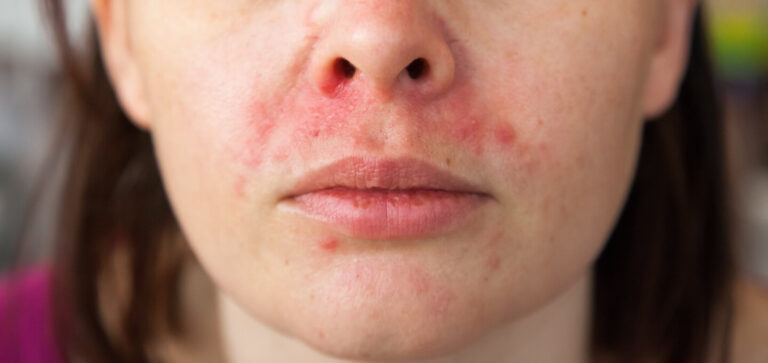
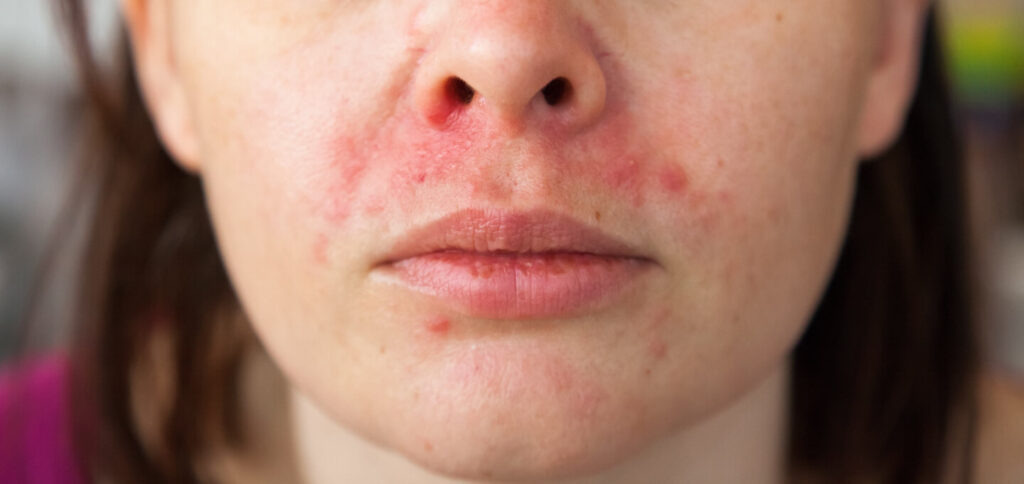
If you have perioral dermatitis, you’d normally see small red bumps, mild peeling, and pus bumps around the mouth, nose, lips, and even the chin. The areas around the eyes and cheeks may also sometimes be affected. This skin disease can look a lot like acne, although its symptoms can be accompanied by mild itchy skin or a burning sensation.