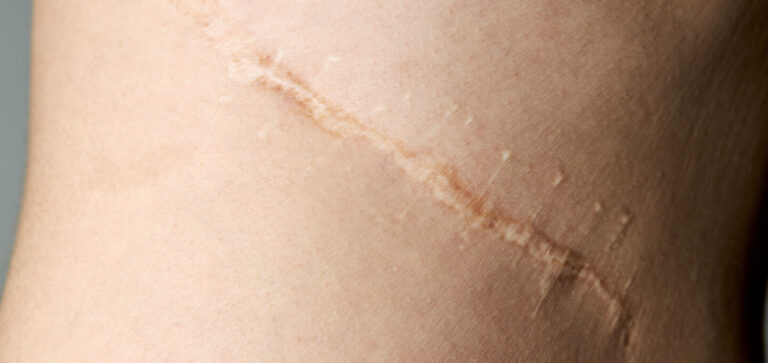
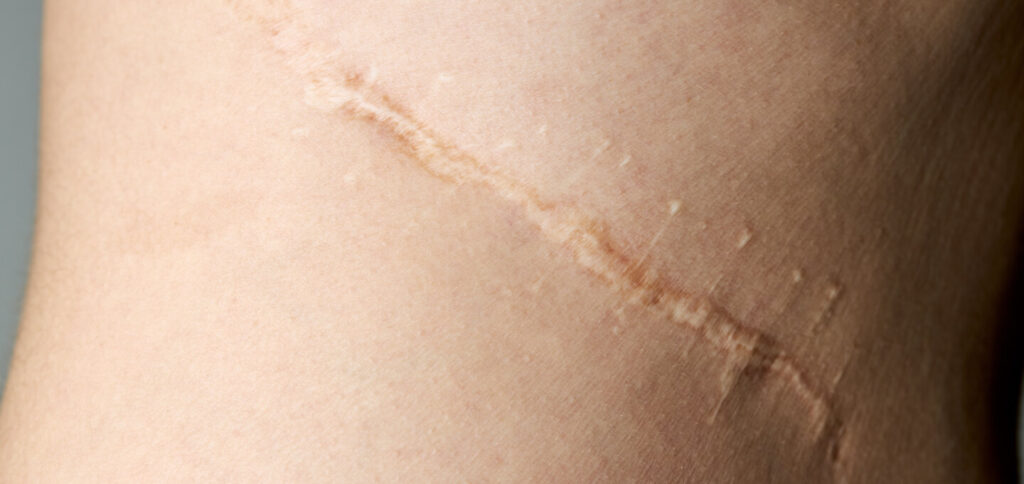
Scars are a very common skin condition that almost all people will have at some point in their lives. They can develop anywhere on the body where the skin was injured or wounded. Some of the most common types of scars are:
Fine Line Scars
These scars form after a minor wound or cut to the skin. They will initially appear as a raised scar and as the skin heals, it will flatten and leave a visible fine line or small mark. These scars can be itchy for the first few months but overall discomfort will disappear as it completely heals. Most fine line scars can appear lighter or darker than the surrounding skin of the injury.
Keloid Scars
Thick, rounded scars that form above the skin surface and appear larger than the wound are called keloid scars. They’re generally an overgrowth of scar tissue due to excess collagen produced at the injured area. This type of scar develops gradually and can appear within months after the skin damage.
They’re very distinct in appearance since they usually have a darker color than the skin surrounding the scar. Keloid scars can’t go away on their own so it’s important to see a dermatologist and get proper treatment.
Hypertrophic Scars
Like keloid scars, a hypertrophic scar forms when too much collagen is at the wounded site. However, these scars don’t expand and spread beyond the affected area. Hypertrophic scars appear raised on the skin surface but they can flatten and become less noticeable over time.
Depressed Scars
Also known as pitted or atrophic scars, these are marks that form just beneath the surface of the skin. It typically has a sunken look and appears like small indentations on the skin. A depressed scar gets more visible as you age as a result of the skin losing its firmness and elasticity. This type of facial scar usually forms after having acne or chickenpox.
Contracture Scars
A contracture scar is commonly a result of burns on the skin. This type of scar usually forms new tissue that’s tighter, thicker, and less flexible than your skin. As a result, burn scars can restrict your movement.