Treatments
Conditions Treated
Locations
Our Team
Patient Resources
Blog
Contact Us
CALL NOW

Is It Okay To Get Mohs Surgery While I Have a UTI?

Book An Appointment
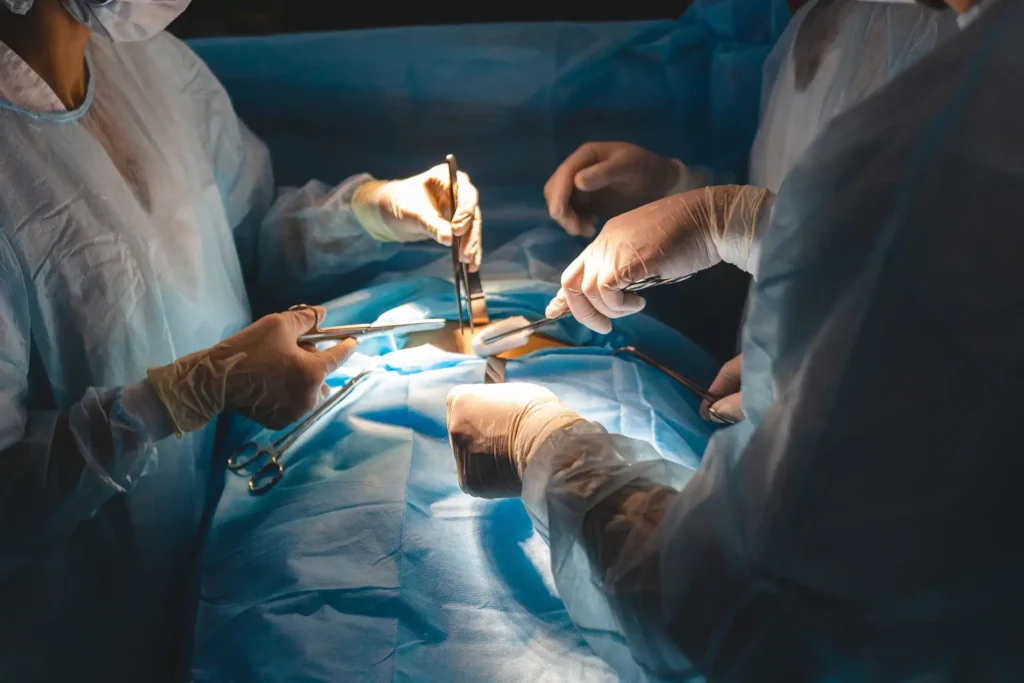
Surgeons perform an operation on a patient in an operating room, with surgical instruments visible in the foreground.

Key Takeaways:

  • If you have symptoms of or have been diagnosed with an active urinary tract infection (UTI), you must postpone your procedure.
  • This is a non-negotiable safety protocol designed to prevent serious, life-threatening complications, including sepsis.
  • A short, controlled delay to fully treat the infection is the safest and most effective path toward a successful surgery and a smooth recovery.
  • Your immediate next step is to call your surgeon's office ASAP to inform them.

A Moment of Concern, A Plan for Confidence

Four surgeons in green surgical attire operate on a patient under bright lights in an operating room.

Discovering you have a urinary tract infection (UTI) just before your scheduled Mohs surgery for skin cancer is understandably stressful. You're preparing for an important procedure to treat your cancer, and now a new, unexpected health issue has appeared. The thought of delaying your cancer surgery is undoubtedly scary, and you likely feel caught between two conflicting priorities.

Let us be direct and clear to ease your mind: postponing your surgery is the right and safe decision. It is the only decision that protects your health and ensures the best possible outcome for your procedure. At Dermatology & Skin Health, our protocol is built on a simple principle: patient safety before procedure scheduling. 

This situation, while unsettling, is one that medical teams are fully prepared for, and managing it correctly is key to your long-term well-being. This guide will walk you through why a delay is necessary and provide a clear, actionable plan to give you back a sense of control.

The Medical Reasons: Why a UTI and Surgery Don't Mix

We believe an informed patient is an empowered patient. To help you understand why we must take this precaution, we want to be completely transparent about the medical risks we are protecting you from when we postpone surgery due to an active infection.

Risk 1: Spreading Bacteria to the Bloodstream (Sepsis)

A UTI means there is an active bacterial colony in your urinary system. Any surgery, including a skin procedure like Mohs, creates an entry point into the body and temporarily places stress on your system. This can provide a pathway for bacteria from your bladder to escape into your bloodstream.

When this happens, it can lead to a severe, body-wide reaction called sepsis. Sepsis is a life-threatening medical emergency caused by the body's overwhelming response to an infection. To prevent this serious complication, surgeons will not operate on a patient with a known active infection elsewhere in the body.

Risk 2: Compromised Wound Healing & Scarring

Think of your immune system as a highly skilled security team. Right now, that team is busy fighting the active infection in your urinary tract. If we proceed with surgery, we are essentially asking that same team to guard a new area—your surgical wound—while they are already occupied.

This diversion of resources means your body's ability to heal the surgical site is compromised. So what does this mean for your final result? It can lead to a higher risk of a surgical site infection, delayed or poor wound healing, and potentially a more noticeable, less optimal scar. Ensuring a smooth recovery and the best cosmetic outcome starts with a healthy, focused immune system.

Risk 3: Antibiotic Complications

Treating a UTI requires a specific course of antibiotics. Proceeding with surgery while you are in the middle of this treatment, or just starting it, can introduce complications. Your medical team needs to know exactly what medications you are on to avoid negative interactions with anesthetics or other medications that might be used during your procedure. Furthermore, a post-surgical infection would require different antibiotics, which could be complicated by your current treatment. The safest approach is to resolve one issue completely before introducing another variable.

Your 3-Step Action Plan: Taking Control of the Situation

Four surgeons in blue scrubs and masks perform an operation under bright surgical lights in a dark operating room.

Feeling overwhelmed is normal. The good news is that the path forward is clear and straightforward. Follow these three steps to manage the situation safely and confidently.

1. Call Your Surgeon's Office Immediately

Your first and most important step is to pick up the phone and call the office of the surgeon who is scheduled to perform your Mohs procedure.

  • What to say: "Hello, I am a patient of Dr. [Surgeon's Name] and I am scheduled for Mohs surgery on [Date]. I am calling because I have developed symptoms of a urinary tract infection / have been diagnosed with a UTI."
  • What to expect: The staff will thank you for calling. This is a routine situation for them. They will likely ask you some questions and will immediately relay the information to the surgeon. Your surgery will be postponed, and this call is the critical first step in that process. You are doing exactly the right thing.

2. Contact the Doctor Treating Your UTI

Next, ensure you are in contact with the physician who is managing your UTI treatment (this might be your primary care doctor or a urologist).

  • Your Goal: Inform them that your surgery has been postponed and confirm the treatment plan. It is critical that you complete the full course of antibiotics they prescribed, even if you start to feel better after a few days.
  • Confirm Resolution: Your surgeon will likely require confirmation that the infection is completely gone before they will reschedule your procedure. This may involve a follow-up urine test after you have finished your antibiotics.

3. Reschedule Your Surgery with Confidence

Once you have completed your antibiotic treatment and the infection has been confirmed as resolved, you can reschedule your Mohs surgery.

  • Rest Assured: Your surgical team understands the importance of your procedure and will work to find the next available and safe date for you. A delay of a week or two to ensure your body is healthy is standard practice and is the surest way to a one-time, successful surgery.

Answering Your Urgent Questions (FAQ)

Do I really have to tell my surgeon about my UTI?

Yes. Unequivocally, yes. It can be tempting to hope the infection will clear up on its own or to downplay the symptoms because you are afraid of delaying your cancer treatment. This is a dangerous gamble.

"Withholding this information puts your health at significant risk. Your surgical team relies on you for accurate information to keep you safe. Our single most important goal is a safe and successful outcome for you, and we can only achieve that with full transparency."

How long will my surgery be delayed?

The length of the delay is typically short and controlled. It depends on two main factors:

  1. The length of your antibiotic course (often 7-10 days).
  2. The time needed to confirm the infection is resolved (e.g., getting a follow-up urine test and its results).

In our clinical experience, this process usually results in a delay of about two to three weeks. Your surgical team will keep your case on their radar and work to get you rescheduled as soon as it is medically safe to do so.

Are there exceptions for very high-risk skin cancers?

This is a rare and complex situation that is handled on a case-by-case basis. If you have a particularly aggressive or high-risk skin cancer (such as a rapidly growing melanoma or a Merkel cell carcinoma), postponing surgery is still the default safety protocol.

However, in these scenarios, your surgeon will make a careful risk-benefit decision, often in direct consultation with other specialists. For instance, in one anonymized clinical scenario we managed, a patient with an aggressive tumor and a severe UTI required coordination between our dermatology team and a urologist. 

The patient was admitted to the hospital for rapid IV antibiotic treatment to resolve the infection as quickly as possible, minimizing the surgical delay while still prioritizing safety. This level of coordination is reserved for extraordinary circumstances and is always managed by your medical team. You should never make this decision on your own.

Your Health Comes First, Always

Receiving two different medical diagnoses at once is unsettling. However, viewing this postponement not as a setback but as a strategic safety measure is crucial. A short pause to allow your body to heal from the UTI is the smartest path to ensuring your skin cancer surgery is successful, your recovery is smooth, and your outcome is the best it can be. 

By making that phone call to your surgeon, you are taking an active, empowered role in your own healthcare and prioritizing your long-term well-being. At Dermatology & Skin Health, that is a decision we will always support.

Related Posts

menuchevron-down